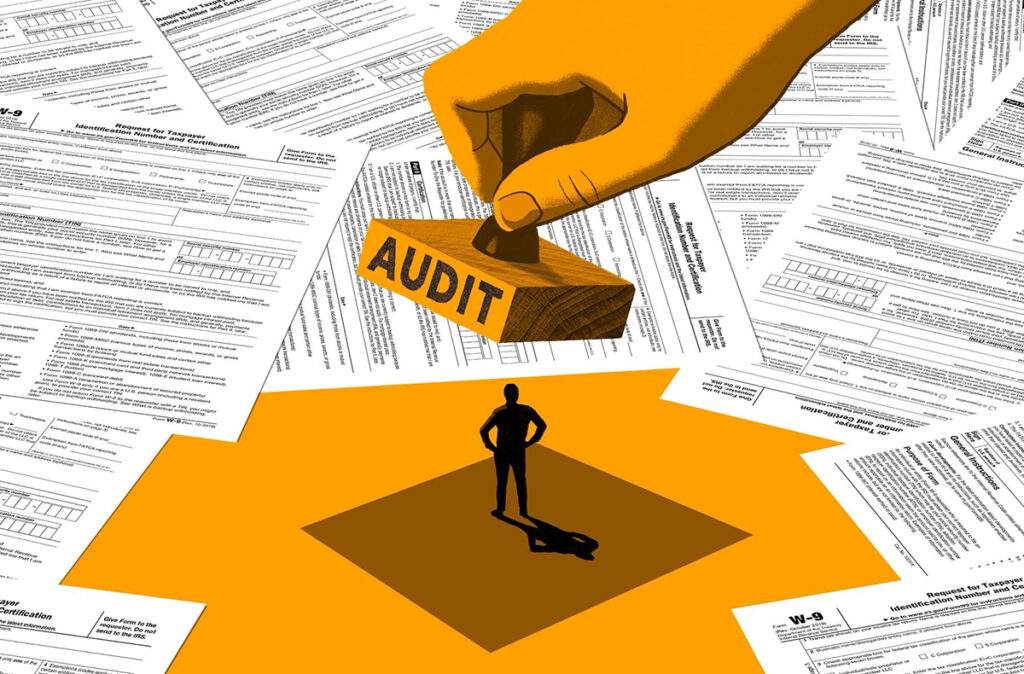
As a business owner in 2026, understanding what triggers IRS audits is critical to protecting your business and avoiding costly examinations. The Internal Revenue Service uses sophisticated data analytics and selection criteria to identify returns requiring closer examination. Proper bookkeeping practices and accurate record-keeping are your best defense against audit risk. This comprehensive guide explores the warning signs that attract IRS scrutiny in 2026 and provides actionable steps to protect your business.
Understanding IRS Audit Selection in 2026
The IRS does not select returns for audit randomly. According to the Treasury Inspector General for Tax Administration (https://www.tigta.gov/), the IRS uses multiple selection methods to identify returns for examination. These methods include automated data matching, artificial intelligence analysis, and statistical sampling through the Compliance Measurement Program (formerly known as the Taxpayer Compliance Measurement Program).
For 2026, understanding these selection criteria helps you maintain compliant financial records. The IRS focuses its enforcement resources on areas where they identify the highest tax gap. According to recent IRS reports on enforcement priorities (https://www.irs.gov/newsroom/filing-season-2026-begins), certain industries and business structures face higher audit rates than others.
For small business owners, audit rates depend on several factors, including business structure (sole proprietor, partnership, S-corporation, or C-corporation), gross receipts, deduction claims, and whether the return contains red flags. By recognizing these warning signs and avoiding them, you significantly reduce your audit risk.
Red Flag #1: Large Deductions Lacking Proper Documentation
One of the most common audit triggers in 2026 is claiming deductions that appear unusually large relative to your business income and industry norms. The IRS maintains data on average deduction percentages by industry and income level. If your deductions significantly exceed these benchmarks, your return becomes a candidate for examination.
Understanding Deduction Thresholds
According to IRS Publication 587 (https://www.irs.gov/publications/p587), home office deductions are typically audited when they exceed 10 to 15 percent of gross income without proper documentation. Vehicle expense deductions face scrutiny when they exceed 50 percent of revenue for service businesses. Meal and entertainment expenses (now limited to 50 percent deductibility under most circumstances) attract attention when they exceed 5 to 10 percent of gross business income.
The Documentation Requirement
The critical issue is not the deduction amount itself but the lack of supporting documentation. The IRS requires contemporaneous written acknowledgment for charitable contributions (https://www.irs.gov/charities-non-profits/charitable-organizations/charitable-contribution-deductions), detailed records for vehicle expenses, and itemized receipt documentation for meals and entertainment.
For 2026, the IRS expects business owners to maintain the following documentation for deductions:
Original receipts or invoices showing date, vendor, amount, and business purpose. For meals and entertainment, the documentation must include the attendees, the location, and the business discussion topics. For vehicle expenses, contemporaneous logs showing mileage, date, destination, and business purpose. For meals, the receipt must clearly identify the food and beverages (a credit card statement alone is insufficient). For professional services, contracts or engagement letters describing the services provided are necessary.
Many business owners claim deductions but discard supporting documentation after filing, assuming they will never be audited. If selected for audit, the inability to produce contemporaneous documentation results in a deduction disallowance and additional tax liability, plus interest and penalties.
Avoiding the Deduction Red Flag
Implement a system to capture and organize receipts immediately. Digital receipt capture apps have made this process simple and inexpensive. Use dedicated business credit cards that clearly categorize expenses. Maintain a mileage log for business vehicle use using automated mileage tracking apps that create contemporaneous documentation. Keep organized files for each major expense category accessible for at least seven years after filing the return.
Red Flag #2: Significant Inconsistencies Between Reported Income and Bank Records
The IRS matches reported income against third-party information documents, including 1099 forms, W-2 forms, and business banking records. When significant discrepancies exist between your reported income and these third-party sources, your return becomes a high-priority candidate for examination.
The Income Verification Process
For 2026, the IRS obtains copies of business bank deposits through information matching programs. If you report $50,000 in gross business income but your business bank account shows $75,000 in deposits during the same year, the discrepancy raises immediate questions. The IRS will typically initiate an examination to identify whether you failed to report the additional income or whether the discrepancy is explained by business loans, personal deposits, or returns.
Business owners often fail to report income from informal payment arrangements, cash transactions, or third-party platforms. If your business accepts payment through Venmo, PayPal, Square, or similar platforms, these third-party processors report payments exceeding $5,000 annually to the IRS through information return forms starting in 2026 under enhanced reporting rules (https://www.irs.gov/newsroom/payment-card-and-third-party-network-transaction-information-guidance).
Income Sources Commonly Underreported
Side hustles and freelance work are frequently unreported. If you have income from freelance writing, consulting, or other services, all income must be reported, regardless of whether you received a 1099 form.
Bartering arrangements create income that many business owners overlook. If you exchange services or products with another business, the fair market value of what you receive is taxable income that must be reported.
Foreign income requires reporting even if you have a foreign earned income exclusion available. Failure to report foreign income is a serious issue that triggers significant penalties beyond just the tax liability.
Cash transactions represent the most problematic income category. While cash income is perfectly legal, and deductible expenses reduce cash income, the IRS expects all cash transactions to be documented and reported. Simply failing to report cash income because you received no third-party documentation is not a valid defense.
Preventing Income Inconsistencies
Reconcile your business bank account monthly and compare deposits to reported income. Track all income sources, including cash received, card payments, and other revenue streams. Document the business purpose for any non-income deposits (loans, personal transfers, etc.) so you can explain discrepancies. Report all 1099-NEC, 1099-K, and other income information documents received from third parties. Consider requesting an amended return if you discover unreported income before the IRS contacts you (voluntary disclosure often results in reduced penalties).
Red Flag #3: Claiming Business Losses Year After Year

The IRS expects business operations to generate profit. While businesses legitimately experience losses for years, the IRS scrutinizes returns showing losses in multiple consecutive years. A critical issue for the IRS is determining whether an activity is a legitimate for-profit business or a hobby.
The Profit Motive Standard
According to IRS Publication 587 and Treasury Regulation 1.183-2, the IRS determines whether an activity is a business or hobby using a nine-factor profit motive test. While no single factor is determinative, the presence of cumulative losses is a significant indicator that the IRS may challenge the business characterization.
The nine-factor test examines:
Whether you operate the activity in a businesslike manner with records and accounting systems. Whether you operate the activity in a manner consistent with other businesses in the same industry. Whether you have expertise in the activity or have hired experts to assist. The amount of time and effort spent on the activity. Your history of profit or loss in similar activities. Your financial status and whether you have other income sources. Elements of personal pleasure or recreation from the activity. Any changes in methods to improve profitability. Your expectations for future profitability.
If your activity shows losses for three or more years out of five consecutive years (or two or more years out of seven consecutive years for horse racing), the IRS presumes the activity is a hobby rather than a business. This presumption shifts the burden to you to prove the activity is a for-profit business.
The Hobby Loss Consequence
If the IRS characterizes your activity as a hobby, expenses are deductible only to the extent they generate income, which essentially eliminates the deduction value since hobby expenses are classified as miscellaneous itemized deductions subject to the 2 percent floor limitation under current tax law.
Protecting Against the Hobby Loss Challenge
Maintain comprehensive business records showing time invested, marketing efforts, and attempts to generate profit. Document business strategies and changes implemented to improve profitability. Obtain professional guidance through a business advisor or consultant and retain documentation of this guidance. Create a written business plan outlining profit expectations and timelines. Keep records showing income-generating activities and marketing efforts. If losses are legitimate due to the startup phase or market conditions, document these circumstances.
Red Flag #4: Excessive Charitable Deductions Out of Line With Income
The IRS maintains audit statistics for charitable deductions by income level. When charitable contributions exceed 50 percent of adjusted gross income, or in some cases even 10 to 15 percent without strong documentation, the return attracts examination.
Charitable Deduction Substantiation Requirements
For cash contributions, you need a receipt from the charitable organization showing the organization’s name, date of contribution, and amount contributed. For non-cash contributions, the substantiation requirements are more complex. For donations under $250, you need a receipt or written acknowledgment from the charity. For donations of $250 or more, you need a written acknowledgment from the charitable organization that includes a statement of whether you received any goods or services in return.
For non-cash donations exceeding $500, Form 8283 Section A is required. For non-cash donations exceeding $5,000, qualified appraisals and appraiser declarations are mandatory. According to IRS Publication 526 (https://www.irs.gov/publications/p526), inadequate substantiation results in complete disallowance of the deduction.
Valuation Issues
Many business owners claim inflated values for non-cash donations. If you donate used equipment or inventory, the fair market value is based on what the item would sell for, not its original cost. The IRS scrutinizes charitable deductions for non-cash property when the claimed value seems unreasonable.
Preventing Charitable Deduction Challenges
Obtain and retain written acknowledgment from charitable organizations for all donations. For non-cash donations over $5,000, obtain qualified independent appraisals and retain the appraisal reports. Avoid claiming charitable deductions that exceed 10 to 15 percent of your adjusted gross income without a strong justification. Document the charitable nature of the organization and your relationship to it. If you claim significant donations, attach supporting documentation to your return rather than waiting for an audit.
Red Flag #5: Failure to Report Foreign Income and Foreign Financial Accounts
International business operations create compliance obligations that many business owners overlook. Failure to report foreign income is one of the most serious audit triggers in 2026.
Foreign Income Reporting Requirements
All business owners with foreign income must report this income on their tax return, regardless of citizenship status or where the income is earned. The income is subject to U.S. tax and must be reported in U.S. dollars using the average exchange rate for the year.
Additionally, if you have financial accounts maintained outside the United States with aggregate balances exceeding $10,000 at any point during the year, you must file the Report of Foreign Bank and Financial Accounts (FBAR) by April 15th following the end of the calendar year. This requirement applies to business accounts, personal accounts, and any accounts over which you have signing authority.
According to the Financial Crimes Enforcement Network (https://www.fincen.gov/), failure to file an FBAR subjects you to civil penalties up to $10,000 per account per year and potential criminal penalties. Recent IRS guidance has increased enforcement focus on FBAR compliance.
FATCA Compliance
If you have foreign financial accounts exceeding $200,000 in aggregate value (or $300,000 for married couples filing jointly if one spouse resides outside the U.S.), you must file Form 8938 Statement of Specified Foreign Financial Assets along with your tax return. This requirement is separate from FBAR filing and has different thresholds and reporting requirements.
Preventing Foreign Income Issues
Report all foreign income on Schedule C or other appropriate schedules showing the country of origin. Maintain documentation of exchange rates used for currency conversions. File FBAR requirements timely and retain confirmation of filing. Obtain professional guidance if you have significant foreign financial accounts or foreign business operations. Consider voluntary disclosure options if you failed to file FBAR or Form 8938 in prior years (this mitigates penalties substantially).
Red Flag #6: Rounding Numbers Instead of Reporting Exact Amounts
The IRS trains auditors to look for patterns suggesting inadequate record-keeping or estimation rather than actual accounting. When financial statements and tax returns contain rounded figures instead of exact amounts, it suggests the business owner estimated expenses rather than tracking actual costs.
For example, reporting “approximately $5,000” in office supplies, “around $3,500” in professional services, or “roughly $2,000” in vehicle expenses indicates poor record-keeping. A properly maintained accounting system produces exact amounts, not estimates.
The Estimation Problem
When auditors identify a pattern of rounded or estimated figures, they question the reliability of all records. This often triggers a broader examination that might otherwise not occur. The IRS view is that if you estimated some expenses, you likely estimated others, raising questions about whether all income was properly reported.
Using Accounting Software for Accuracy
Modern accounting software solutions like QuickBooks Online (https://quickbooks.intuit.com/), FreshBooks, Xero, and others automatically track exact amounts for all transactions. These systems eliminate estimation issues by requiring exact figures. For business owners still using cash basis accounting without software, implementing accounting software in 2026 is a practical step to protect against this audit risk.
Red Flag #7: Failure to Report Cash Transactions and Tips
Service businesses, including restaurants, bars, salons, hotels, and other hospitality businesses, handle significant cash and tip income. Many business owners fail to properly account for cash transactions and tips, creating substantial audit risk.
Cash Income Documentation
The IRS expects business owners to track and report cash income systematically. Simply depositing cash into your business bank account without documentation does not satisfy the reporting requirement. You must maintain daily records showing cash received, organized by source.
For tips, both employees and employers have reporting responsibilities. Employees must report tips to employers, and employers must withhold payroll taxes on tips. According to the IRS guidance on tip reporting (https://www.irs.gov/businesses/small-businesses-self-employed/tip-income), failure to properly report tips triggers both employer and employee penalties.
Establishing Cash Handling Systems
Implement daily cash reconciliation procedures. Count cash at the end of each business day and record the amount in a cash receipt log. Deposit cash promptly (typically daily or within a few business days). Reconcile deposits to recorded income amounts. Train employees to report tips daily and maintain tip records. Implement point-of-sale systems that automatically track cash transactions and income.
Red Flag #8: Employee Misclassification as Independent Contractors
The IRS and Department of Labor both focus enforcement resources on independent contractor misclassification. This is particularly significant in 2026 as the gig economy continues to expand and misclassification becomes increasingly common.
The Misclassification Problem
Employers misclassify employees as independent contractors to avoid payroll taxes, workers’ compensation insurance, and employee benefits obligations. From the IRS perspective, misclassification means underreported payroll taxes and uncollected employee withholdings.
According to the Department of Labor guidance (https://www.dol.gov/agencies/whd/flsa/misclassification), the determination of whether a worker is an employee or independent contractor depends on the degree of control and independence in the working relationship. The IRS uses a 20-factor test to make this determination, though courts often apply an economic reality analysis.
The 20-Factor Test
The IRS considers factors including the following:
Whether the worker is required to follow detailed instructions. Whether the worker receives training from the employer. Whether the worker’s services are integrated into the employer’s business. Whether the worker performs services personally or can hire substitutes. Whether the employer hires, supervises, and pays the worker. Whether the work is an integral part of the employer’s business. Whether the worker sets their own hours. Whether the worker must work exclusively for this employer. Whether the employer provides tools, materials, and equipment. Whether the worker sets their own price or rate. Whether the worker operates as a business with their own clients or customers. Whether the worker can make a profit or loss. Whether the worker is reimbursed for business expenses. Whether the worker has regular wages or is compensated by the job. Whether the employer withholds taxes and pays employment taxes.
Consequences of Misclassification
If audited and found to have misclassified employees, you face back payroll taxes with interest and penalties. The penalties include the employer portion of Social Security and Medicare taxes, plus 20 percent accuracy-related penalties. In cases of intentional disregard, penalties can reach 75 percent of unpaid taxes.
Proper Employee Classification
Review worker classifications with legal counsel to ensure they comply with current IRS guidelines. When doubt exists, treating workers as employees is safer than risking misclassification penalties. Document the business relationship with written agreements specifying the nature of the relationship. Maintain payroll records and issue W-2 forms for employees and 1099 forms for legitimate independent contractors.
Red Flag #9: Missing or Late Tax Return Filings
The IRS maintains sophisticated systems to track returns filed late or not filed at all. Missing tax return filings create multiple problems beyond audit risk.
The Filing Deadline Requirement
Tax returns for business income are due April 15th following the end of the tax year (January 31st for calendar year businesses). Extensions to October 15th are available by filing Form 4868 or Form 7004 before the original deadline.
Failing to file a return, even if you cannot pay all taxes owed, is a serious issue. The IRS imposes failure-to-file penalties at 5 percent per month of unpaid tax, up to 25 percent. If the failure is fraudulent, the penalty increases to 15 percent per month up to 75 percent.
Interest and Penalties
Beyond failure-to-file penalties, interest accrues on unpaid taxes at the federal short-term rate plus 3 percent, compounded daily. For 2026, the federal interest rate is approximately 8 percent annually. A $10,000 tax bill that goes unpaid for two years results in approximately $1,600 in interest before penalties are considered.
Amended Returns and Corrections
If you discover you filed an incorrect return, file Form 1040-X (amended return) promptly. Generally, you have three years to file an amended return claiming refunds. Filing amended returns voluntarily before audit contact demonstrates good faith compliance.
Filing Deadline Protection
File your return by the deadline, even if you cannot pay the entire tax liability. Paying taxes owed monthly or arranging a payment plan with the IRS is far preferable to not filing. Request an extension if you need additional time to prepare your return. If you have prior unfiled returns, consult a tax professional about voluntary disclosure options.
Red Flag #10: Inadequate Home Office Deduction Documentation

Home office deductions are among the most commonly audited deductions for self-employed individuals and small business owners. While the deduction is legitimate, adequate documentation is essential.
Home Office Deduction Rules
The IRS allows home office deductions only if the space is used regularly and exclusively for business purposes. Occasional use of your home office for personal activities disqualifies the deduction. Shared spaces (home office that also serves as a guest bedroom) do not qualify.
According to IRS Publication 587 (https://www.irs.gov/publications/p587), you can use either the simplified method or the regular method to calculate the deduction. The simplified method allows $5 per square foot up to 300 square feet (maximum $1,500 annually). The regular method requires allocation of actual home expenses.
Documentation Requirements
If audited, the IRS will request photographs showing the dedicated office space, utility bills or mortgage statements showing home expenses, and a detailed calculation of the percentage of your home is used for business. You must demonstrate that the space is used exclusively for business purposes and maintain records supporting the calculation.
Preventing Home Office Audit Risk
Calculate the deduction accurately based on actual square footage and home expenses. Document the exclusive business use of the space. Use the simplified method if your calculation is modest or your records are incomplete. Take photographs showing the dedicated office setup. Maintain utility bills and mortgage statements, documenting home expenses. Keep detailed records if using the regular method, showing allocation methodology.
Creating a 2026 Bookkeeping Compliance Checklist
To avoid audit triggers, implement these practices immediately:
Monthly Tasks
Reconcile business bank accounts to accounting records. Review income and cross-reference to deposits. Verify expense amounts against supporting documentation. Categorize transactions consistently. Ensure all transactions are recorded with complete details.
Quarterly Tasks
Prepare financial statements (income statement and balance sheet). Compare your figures to industry benchmarks. Review deductions for appropriateness relative to revenue. Verify that estimated tax payments are accurate. Address any discrepancies between records and bank statements.
Annual Tasks
Compile all receipts and documentation for the year. Organize records by expense category. Reconcile total deductions to supporting documentation. Calculate business profit or loss. File taxes timely or request an extension. Maintain organized files for retention.
Working with Tax Professionals for Audit Risk Management
Professional tax preparation services in 2026 provide value beyond simply preparing your return. Quality tax professionals help identify audit risks in your bookkeeping and financial records before filing your return.
When engaging a tax professional, discuss your business structure and whether your classification is optimal. Review your historical returns to identify patterns that might attract audit attention. Discuss documentation standards and implement systems to maintain adequate records. Obtain written guidance on specific tax issues if your situation is complex. Ask your tax professional to flag any items on your return that might attract examination.
Conclusion: Protecting Your Business from Audit Risk in 2026
Audit risk is not random. The IRS systematically targets returns containing red flags that statistics suggest have higher noncompliance rates. By understanding these warning signs and implementing proper bookkeeping practices in 2026, you can substantially reduce your audit risk while improving your business’s financial management.
The foundation of audit protection is accurate, well-documented bookkeeping. Implement accounting software that tracks exact amounts rather than estimates. Maintain organized receipts and supporting documentation. Reconcile your accounting records to bank statements regularly. Report all income from every source. Document deductions with contemporaneous written evidence. Maintain adequate employee records and proper classifications.
Most importantly, address any prior issues proactively. If you discover you failed to report income, file amended returns voluntarily. If you have misclassified employees, correct the classification and address past payroll obligations. These voluntary corrections mitigate penalties and demonstrate good faith compliance.
By taking these steps now, you protect your business, reduce your audit risk, and maintain the financial records necessary for successful business growth and management in 2026.

